

Operation Process and Working Principle of Gray Calcium Material Pneumatic Conveying System
Gray calcium material, a widely used industrial raw material, often requires efficient and reliable transportation methods for processing and distribution. The pneumatic conveying system has emerged as a key solution for handling such materials, offering advantages like low energy consumption, minimal dust generation, and flexible installation. This article delves into the operation process and working principle of a specialized pneumatic conveying system designed for gray calcium material, highlighting its technical features and practical applications.
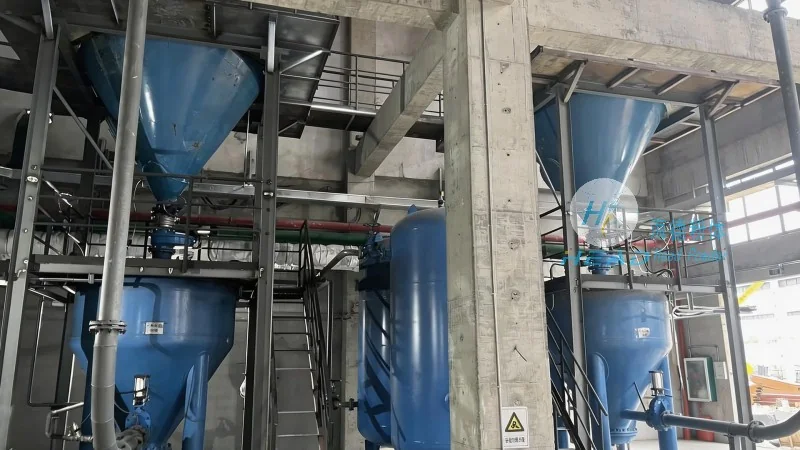
Overview of the Pneumatic Conveying System for Gray Calcium Material
The pneumatic conveying system for gray calcium material is engineered to transport bulk materials through a pipeline using air or gas as the conveying medium. This system typically consists of several core components, including a material feeder, a conveying pipeline, a dust collector, and a control system. The design is tailored to handle the specific physical properties of gray calcium, such as its particle size, density, and flow characteristics, ensuring optimal performance and minimal operational issues.
Key Components and Their Functions
Each component of the system plays a critical role in the overall operation. The material feeder is responsible for feeding the gray calcium material into the conveying pipeline at a controlled rate, preventing blockages and ensuring a steady flow. The conveying pipeline, usually made of durable materials like stainless steel or special plastic, transports the material and air mixture. The dust collector, equipped with filtration systems, captures any airborne particles, maintaining air quality and complying with environmental regulations. The control system monitors and adjusts the operation parameters, such as air pressure and material feed rate, to maintain system efficiency and safety.
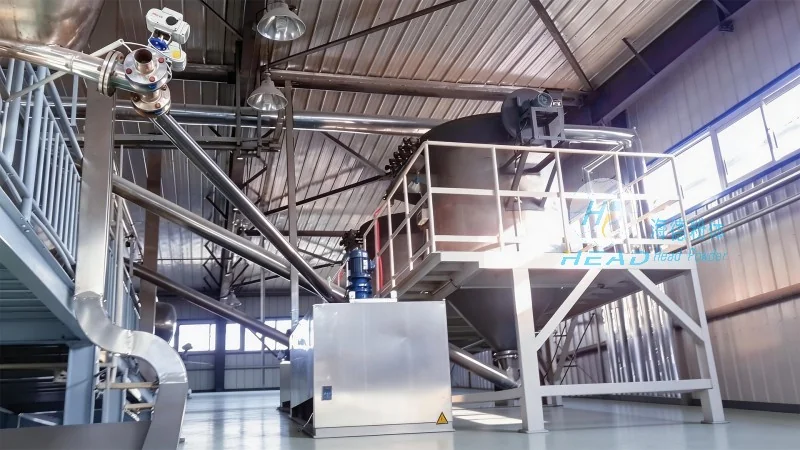
Working Principle of the Pneumatic Conveying Process
The operation of the gray calcium pneumatic conveying system follows a systematic process. Initially, the gray calcium material is fed into the system via the material feeder. Simultaneously, air is supplied to the pipeline, creating a pressure differential that propels the material forward. As the material moves through the pipeline, it is suspended and carried by the air stream, which allows for efficient transportation over long distances. The system may use different conveying modes, such as dilute-phase or dense-phase, depending on the material's characteristics and the required transport distance. The dilute-phase mode is commonly used for shorter distances, where the material is suspended in a high-velocity air stream, while the dense-phase mode is employed for longer distances, where the material is conveyed in a more concentrated form with lower air velocity.
Operation Process: Step-by-Step Analysis
The operation process of the gray calcium pneumatic conveying system can be broken down into several key steps. First, the material is prepared and fed into the system, ensuring a consistent flow rate. Second, the air supply is activated, creating the necessary pressure to initiate the conveying process. Third, the material is transported through the pipeline to the destination point, such as a storage silo or processing unit. Fourth, the system is monitored for any deviations in performance, and adjustments are made as needed to maintain optimal operation. Finally, the system is shut down safely, and the material is discharged from the pipeline. This step-by-step approach ensures that the system operates efficiently and reliably, minimizing downtime and maximizing productivity.
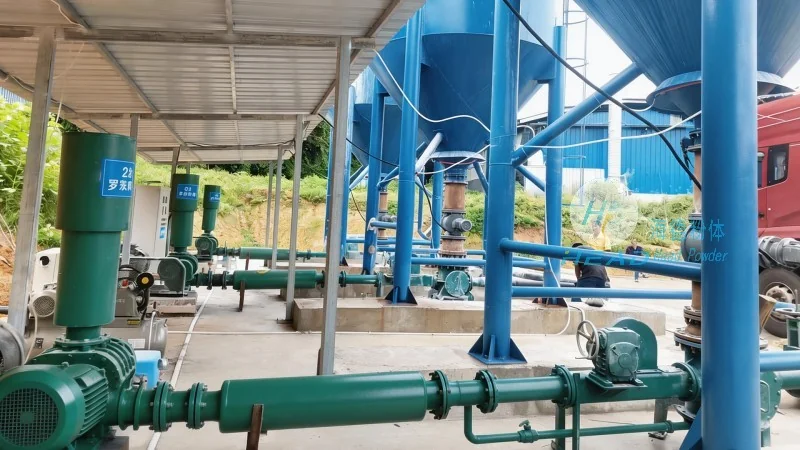
Technical Advantages and Practical Applications
The pneumatic conveying system for gray calcium material offers several technical advantages that make it an ideal choice for industrial applications. One of the primary benefits is its ability to handle bulk materials with minimal human intervention, reducing labor costs and improving safety. The system also provides a dust-free environment, which is crucial for maintaining workplace health and compliance with environmental regulations. Additionally, the system's flexibility allows for easy integration with existing production lines, and its modular design enables scalability for future expansion. These advantages make the system suitable for various industries, including construction, chemical manufacturing, and food processing, where gray calcium is used as a raw material.
About Shandong HeadPowder Engineering Co., Ltd.
Shandong HeadPowder Engineering Co., Ltd., a leading manufacturer in the field of material handling equipment, specializes in designing and manufacturing high-quality pneumatic conveying systems for various industrial applications. With years of experience and a commitment to innovation, the company has developed advanced technologies to meet the evolving needs of the industry. The company's products are known for their reliability, efficiency, and durability, and are widely used by clients in China and internationally. HeadPowder's team of experts provides comprehensive support, from system design and installation to maintenance and after-sales service, ensuring that clients receive the best possible solution for their material handling needs. The company's headquarters is located in Shandong, China, where it operates a state-of-the-art manufacturing facility and a research and development center. HeadPowder is dedicated to providing sustainable and efficient solutions for material transportation, contributing to the growth and development of the industrial sector.