

Operation Process and Working Principle of Pneumatic Conveying Equipment for Graphite Powder Materia
HeadPowder, a leading manufacturer based in Shandong, China, specializes in the design and production of advanced pneumatic conveying systems tailored for handling graphite powder. This article provides a detailed exploration of the operation process and working principles of such equipment, highlighting its efficiency and reliability in material transport.
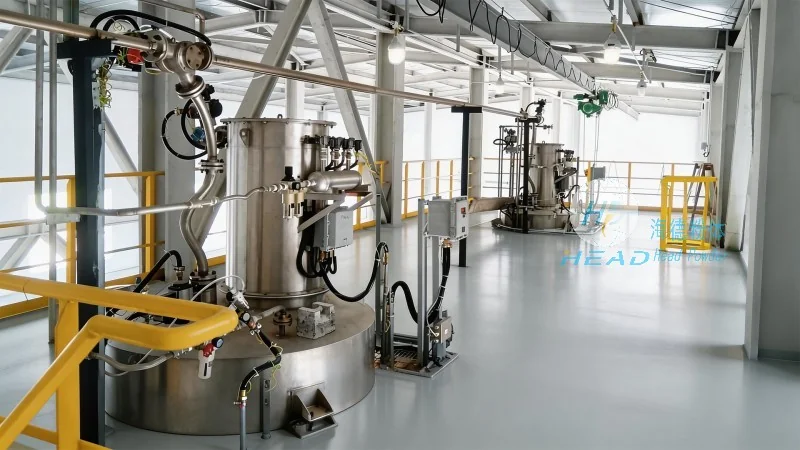
Overview of Pneumatic Conveying Systems for Graphite Powder
Pneumatic conveying equipment is a critical solution for the efficient and safe transport of fine powders like graphite. Unlike traditional mechanical methods, this system utilizes air or gas as the conveying medium to move the material from one location to another. The system is particularly suitable for applications where dust control, minimal product contamination, and high throughput are essential. HeadPowder's systems are engineered to meet these demands, ensuring optimal performance in various industrial settings.
The Operation Process of Graphite Powder Pneumatic Conveying Equipment
The operation process of a pneumatic conveying system for graphite powder involves several key steps. Initially, the graphite powder is fed into the hopper or feeder of the system. The feeder then regulates the flow rate of the material into the conveying line. Simultaneously, a fan or blower generates the necessary air pressure and flow within the pipeline. As the air flows through the line, it picks up the graphite particles, forming a slurry-like mixture known as a "pneumatic stream." This stream is then transported through the pipeline to the destination point, such as a storage silo or processing unit. At the receiving end, a separator or cyclone separates the graphite powder from the air, allowing the powder to be collected while the air is either filtered or recirculated.
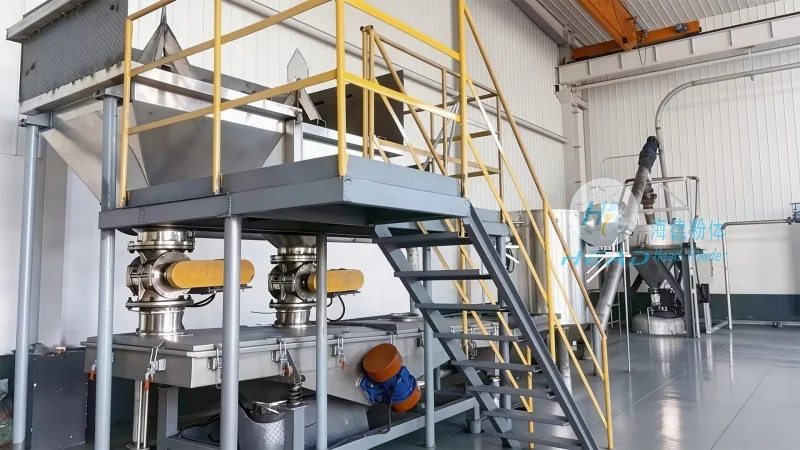
Working Principle of Pneumatic Conveying Equipment for Graphite Powder
The working principle of the system is based on the fundamental concept of fluid dynamics and particle transport. The core components include a feeding mechanism, a pressure source (fan/blower), a conveying pipeline, and a separation unit. The feeding mechanism ensures a consistent supply of graphite powder into the system. The fan or blower creates a pressure differential, which drives the air through the pipeline. The air velocity is carefully controlled to ensure that the graphite particles are entrained without causing excessive wear or degradation. The separation process at the end uses centrifugal force to separate the heavier graphite particles from the lighter air, allowing for clean collection of the material. This principle enables the system to handle fine powders like graphite efficiently, minimizing product loss and ensuring high purity.
Key Components and Their Functions in the System
Several key components work in tandem to ensure the smooth operation of the pneumatic conveying system. The hopper or feeder is responsible for storing and feeding the graphite powder at a controlled rate. The fan or blower provides the necessary air pressure and flow, acting as the "engine" of the system. The conveying pipeline, typically made of materials resistant to corrosion and abrasion (such as stainless steel or plastic), transports the mixture of air and graphite particles. The separator or cyclone at the receiving end uses centrifugal force to separate the powder from the air, ensuring that the graphite is collected without contamination. Additionally, filters or air treatment units may be included to remove any fine particles from the exhaust air, maintaining environmental compliance and system efficiency.
Advantages of Using Pneumatic Conveying for Graphite Powder
Employing pneumatic conveying systems for graphite powder offers several advantages over traditional methods. Firstly, it provides a dust-free and enclosed transport process, which significantly reduces the risk of dust exposure and environmental contamination. This is particularly important for graphite, which can be hazardous if inhaled. Secondly, the system minimizes product contamination, as the material is handled in a closed environment, preventing contact with external elements. Thirdly, it offers high throughput and flexibility, allowing for the transport of large quantities of graphite over long distances with minimal downtime. Additionally, the system is easy to maintain and can be integrated with other processing equipment, enhancing overall operational efficiency.
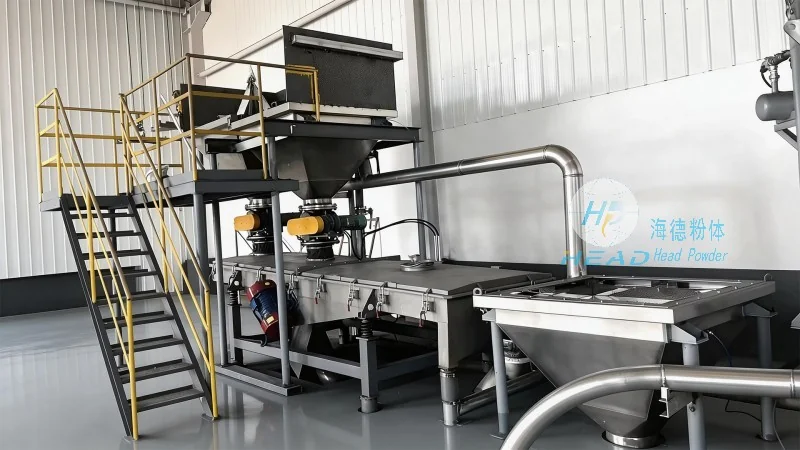
Applications and Industries Utilizing This Technology
The pneumatic conveying equipment for graphite powder is widely used in various industries, including the graphite manufacturing sector, battery production, and the production of lubricants and coatings. In the graphite industry, these systems are used to transport raw graphite from storage to processing units, ensuring a continuous supply of material. In battery manufacturing, the system efficiently conveys graphite powder to the electrode production lines, where it is used as a key component in lithium-ion batteries. Similarly, in the lubricant and coating industries, the system ensures the precise delivery of graphite powder to production processes, maintaining product quality and consistency.
Conclusion
HeadPowder's pneumatic conveying equipment for graphite powder is a reliable and efficient solution for material transport in various industrial applications. By understanding the operation process and working principles, users can appreciate the advanced engineering and design that goes into these systems. The combination of enclosed transport, high throughput, and minimal contamination makes this technology a preferred choice for handling fine powders like graphite. With its headquarters in Shandong, China, HeadPowder continues to innovate and provide high-quality solutions to meet the evolving needs of the industry.