

Introduction to and Structural Principles of Glass-Blasted Bead Pneumatic Conveying
Glass-blasted beads, also known as expanded glass microspheres, represent a versatile and high-performance material in the construction and industrial sectors. These beads are created by expanding glass particles through a specialized blast process, resulting in a lightweight, porous structure with superior thermal insulation capabilities. The pneumatic conveying of glass-blasted beads is a sophisticated method for transporting these materials, ensuring efficient and reliable material handling from storage to processing stages. This article delves into the fundamentals of glass-blasted bead pneumatic conveying, exploring its structural design and operational principles to provide a comprehensive understanding of the technology.
Introduction to Glass-Blasted Bead Pneumatic Conveying
Glass-blasted beads are widely utilized in applications like lightweight concrete, thermal insulation panels, and decorative coatings due to their excellent thermal stability and low density. Pneumatic conveying systems are essential for moving these beads from storage silos or production lines to the next stage of processing, such as mixing or spray drying. The primary objective of this system is to achieve a consistent flow rate, minimize material loss, and maintain product integrity throughout the transfer process. For companies like Shandong HeadPowder Engineering Co., Ltd., based in China, the adoption of advanced pneumatic conveying solutions is critical for enhancing operational efficiency and meeting the demands of modern manufacturing.
Key Structural Components of the Pneumatic Conveying System
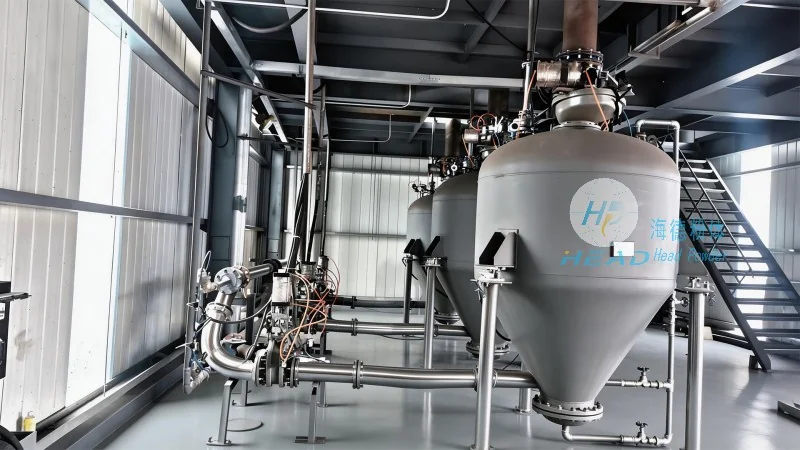
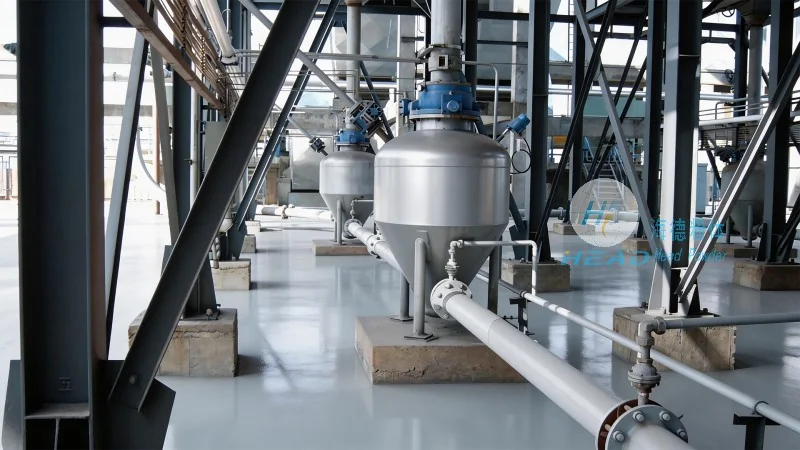
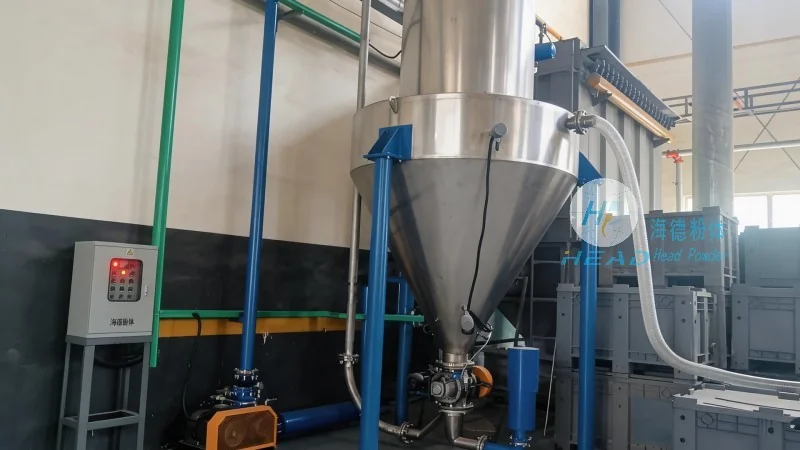
The pneumatic conveying system for glass-blasted beads comprises several interconnected components that work together to facilitate material transport. The system typically starts with a storage hopper or silo, where the beads are stored under controlled conditions to prevent caking or degradation. A feeder mechanism, such as a rotary valve or screw feeder, regulates the flow rate of the beads into the conveying line. The conveying line itself is usually made of stainless steel or other corrosion-resistant materials to withstand the abrasive nature of the glass beads. Pressure vessels or vacuum pumps are used to generate the necessary air pressure or vacuum to move the material through the pipeline. Additionally, cyclone separators and air filters are integrated to remove dust and ensure environmental compliance. The receiver or discharge unit at the end of the line collects the beads and prepares them for further processing.
Operational Principles and Working Mechanism
The operation of a pneumatic conveying system for glass-blasted beads is based on the principles of fluid dynamics and particle transport. In a positive pressure system, compressed air is introduced into the hopper, creating a pressure differential that pushes the beads forward through the conveying line. The air velocity within the pipeline must be sufficient to overcome the gravitational force acting on the beads and the frictional resistance from the pipe walls. The system's efficiency is influenced by factors such as the air-to-material ratio, which is the ratio of air volume to the volume of beads being conveyed. A higher air-to-material ratio generally results in faster transport but may increase energy consumption. In a negative pressure system, a vacuum pump draws air and beads from the source, pulling them through the pipeline to the receiver. This method is often preferred for shorter distances or when the material needs to be transported from a higher elevation to a lower one.
Advantages and Benefits of Pneumatic Conveying
Pneumatic conveying offers several advantages over traditional mechanical conveying methods for handling glass-blasted beads. One of the most significant benefits is the reduction in material degradation, as the beads experience minimal contact with equipment parts, preventing breakage or abrasion. This is particularly important for high-value applications where product quality is paramount. Another advantage is the lower maintenance requirements, as pneumatic systems have fewer moving parts compared to belt conveyors or screw conveyors, reducing the need for frequent repairs and replacements. Safety is also enhanced with pneumatic conveying, as the system minimizes dust exposure and the risk of material spillage, contributing to a cleaner and safer working environment. Furthermore, the flexibility of routing the conveying line allows for easy integration with existing production lines or the addition of new processing stages without major modifications.
Energy Efficiency and Environmental Considerations
The energy efficiency of pneumatic conveying systems is a key factor in their adoption for glass-blasted bead handling. Modern systems utilize high-efficiency blowers and vacuum pumps that minimize energy consumption while maintaining optimal conveying performance. The air-to-material ratio can be optimized to balance transport speed and energy use, ensuring cost-effective operation. Environmental considerations are also addressed through the integration of air filters and dust collection systems, which capture and recycle the air, reducing emissions and complying with environmental regulations. For manufacturers like Shandong HeadPowder Engineering Co., Ltd., these energy-efficient and environmentally friendly solutions align with the growing demand for sustainable manufacturing practices in the industry.