

Introduction to Air-Flow Transport of Ternary Cathode Materials and Structural Principle Explanation
Understanding the air-flow transport of ternary cathode materials is crucial in the modern battery manufacturing industry. This process involves the efficient handling and movement of complex cathode powders, which are essential components in lithium-ion batteries. The technology behind this method not only enhances production efficiency but also ensures the quality and consistency of the final product. In this overview, we will explore the structural principles and operational mechanisms that underpin the air-flow transport system for ternary cathode materials.
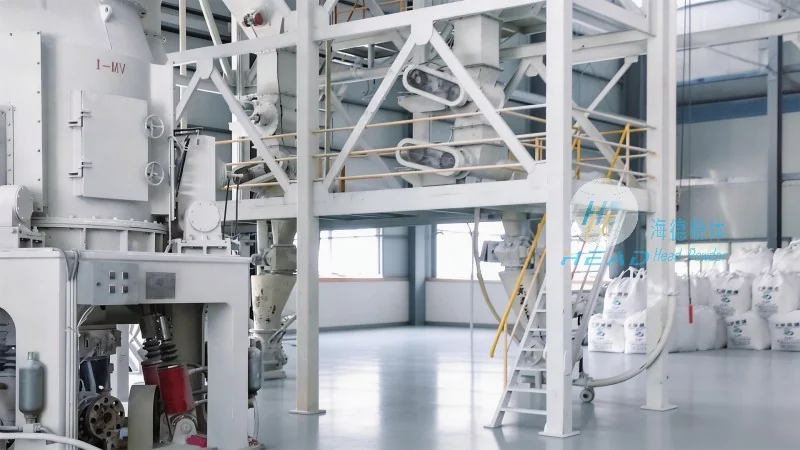
HeadPowder, a leading engineering company based in Shandong, China, specializes in providing advanced solutions for material handling in battery production. With a strong focus on innovation and precision, HeadPowder has developed state-of-the-art air-flow transport systems tailored to the unique requirements of ternary cathode materials. The company's expertise lies in optimizing the flow dynamics, particle size distribution, and overall process control to meet the stringent standards of the battery industry.
Structural Components and Operational Principles
The air-flow transport system for ternary cathode materials consists of several key components that work in harmony to achieve efficient material handling. The primary structure includes a feeding hopper, a transport pipeline, and a discharge mechanism. The feeding hopper is designed to store and meter the cathode powder, ensuring a consistent flow rate. Inside the hopper, a rotating or vibrating mechanism helps to prevent agglomeration and maintain a uniform particle distribution.
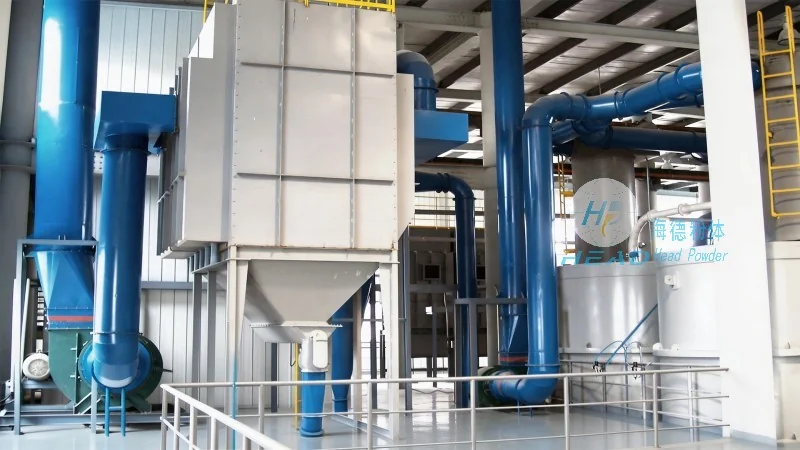
The transport pipeline is typically made of corrosion-resistant materials, such as stainless steel or polymeric tubes, to accommodate the chemical properties of the cathode powders. The pipeline is equipped with air jets or venturi nozzles that generate a high-velocity air stream, which entrains the powder particles and transports them through the system. The velocity and pressure of the air flow are carefully controlled to prevent particle degradation and ensure stable transport.
The discharge mechanism, often a cyclone separator or a rotary valve, separates the powder from the air stream and directs the material to the next processing stage. The cyclone separator uses centrifugal force to separate the heavier powder particles from the lighter air, while the rotary valve provides a controlled discharge of the material, preventing backflow and maintaining a steady output.
Advantages of Air-Flow Transport in Ternary Cathode Handling
Compared to traditional mechanical conveying methods, air-flow transport offers several advantages in handling ternary cathode materials. Firstly, it minimizes particle degradation due to reduced friction and impact during transport. The gentle handling of the powder preserves the particle size distribution and surface properties, which are critical for battery performance. Secondly, the system is highly flexible and can be easily scaled to accommodate varying production volumes. This adaptability makes it suitable for both small-scale research and large-scale industrial applications.
Another key advantage is the ability to maintain a clean and dust-free environment. The enclosed pipeline system prevents the release of fine particles into the air, reducing health hazards and environmental contamination. This is particularly important in the battery manufacturing industry, where regulatory compliance and worker safety are paramount. Additionally, the air-flow transport system can be integrated with other processing steps, such as mixing and coating, to create a seamless production line.
Application in Battery Manufacturing
The air-flow transport of ternary cathode materials is a critical step in the production of high-performance lithium-ion batteries. The process begins with the preparation of the cathode powder, which typically includes a mixture of nickel, cobalt, and manganese (or other transition metals) with organic binders and conductive agents. The air-flow system then transports this powder to the mixing and coating stages, where it is combined with other components to form the cathode slurry.
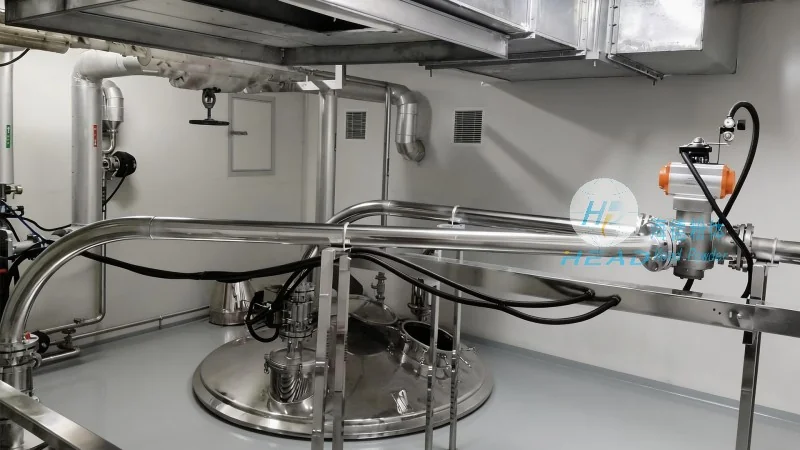
During the mixing stage, the air-flow transport ensures that the powder is evenly distributed and mixed with the binder and conductive additives. This uniform mixing is essential for achieving consistent battery performance across different cells. The subsequent coating process involves applying the slurry onto the current collector, and the air-flow transport system facilitates the precise delivery of the material to the coating machine. The controlled flow of the powder helps to maintain the thickness and uniformity of the coating, which directly impacts the battery's energy density and cycle life.
Quality Control and Process Optimization
HeadPowder employs advanced monitoring and control systems to ensure the quality and efficiency of the air-flow transport process. Sensors are integrated into the system to measure parameters such as air pressure, flow rate, and particle concentration. These real-time data are used to adjust the operational settings, optimizing the transport conditions for the specific cathode material being handled. The company also utilizes computer-aided design (CAD) and computational fluid dynamics (CFD) simulations to model the flow behavior and identify potential bottlenecks or areas for improvement.
Regular maintenance and calibration of the equipment are essential to maintain the performance of the air-flow transport system. HeadPowder provides comprehensive service and support to its clients, including routine inspections, component replacement, and performance tuning. This ensures that the system operates at peak efficiency and meets the evolving demands of the battery industry.
Conclusion
The air-flow transport of ternary cathode materials represents a sophisticated and efficient solution for material handling in battery manufacturing. By understanding the structural principles and operational mechanisms of this technology, manufacturers can enhance production efficiency, improve product quality, and reduce operational costs. HeadPowder, with its expertise and advanced solutions, plays a vital role in supporting the battery industry's transition to more sustainable and high-performance energy storage devices. As the demand for lithium-ion batteries continues to grow, the importance of reliable and effective material handling systems will only increase, making air-flow transport a cornerstone of modern battery production.