

Air-Flow Conveying of Talc Powder: Principles, Classification, and Applications
As a leading provider in the field of powder handling technology, Shandong HeadPowder Engineering Co., Ltd. specializes in the design, manufacturing, and implementation of advanced air-flow conveying solutions for industrial powders, including talc powder. With a strong commitment to quality and innovation, the company has established itself as a trusted partner for businesses seeking efficient and reliable material transport solutions. HeadPowder, as the company is commonly known, operates from China, where it leverages local expertise and resources to deliver tailored solutions that meet the specific needs of its clients.
The Working Principle of Talc Powder Air-Flow Conveying
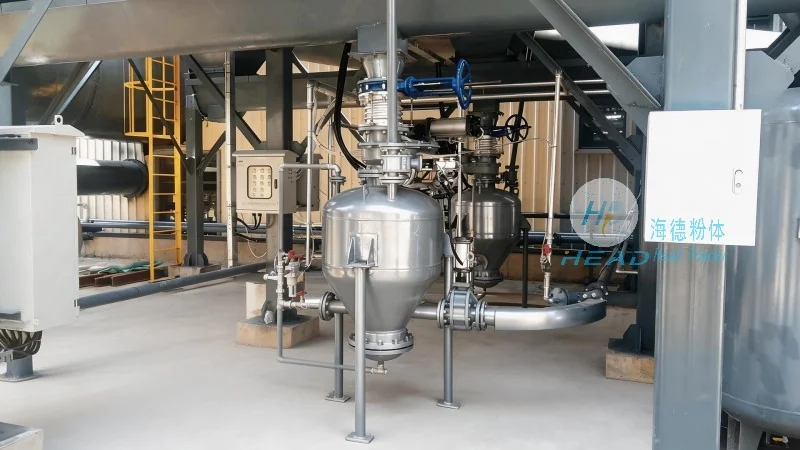
At its core, talc powder air-flow conveying utilizes the principle of pneumatic transport, where a stream of air is used to move dry powder particles through a pipeline system. The process involves several key components and mechanisms that work in concert to ensure efficient material transport. The primary working principle can be broken down into the following stages: first, the talc powder is introduced into the conveying system, typically through a hopper or feeder, where it is then drawn into the pipeline by the moving air stream. The air velocity within the pipeline is maintained at a level sufficient to overcome the gravitational and frictional forces acting on the powder particles, allowing them to be suspended and transported through the system. The conveying velocity and pressure are carefully controlled to prevent particle degradation, blockages, or excessive energy consumption. The system typically includes a blower or compressor to generate the necessary air flow, a filter to remove any fine particles from the air stream, and a discharge point where the talc powder is deposited at the destination. The entire process is designed to be energy-efficient and low-maintenance, making it suitable for continuous operation in industrial settings.
Classification and Applications of Talc Powder Air-Flow Conveying
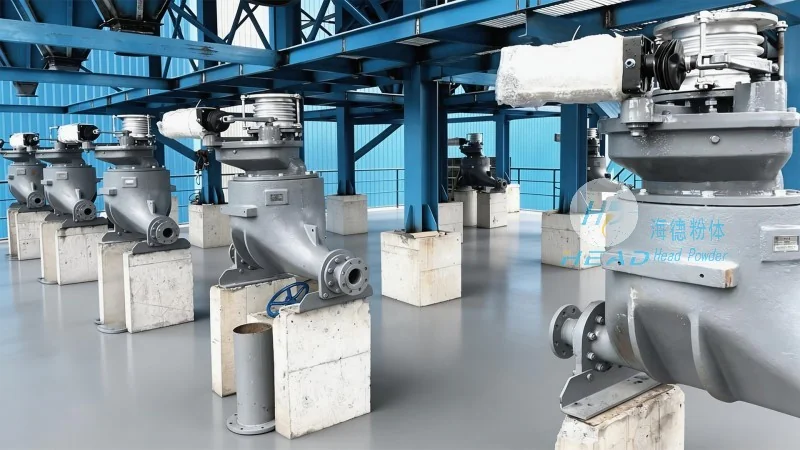
Talc powder air-flow conveying systems can be classified based on several factors, including the type of air flow, the conveying distance, and the material characteristics. The main classifications include dilute phase and dense phase conveying. Dilute phase conveying involves the transport of powder particles in a relatively low concentration within the air stream, typically at velocities above 20 m/s, and is suitable for short to medium distances. This method is commonly used for applications where the talc powder needs to be transported quickly and with minimal pressure drop. Dense phase conveying, on the other hand, involves the transport of powder particles in a higher concentration, often at lower velocities (around 5-10 m/s), and is used for longer distances or when the powder is more prone to degradation. This method reduces the risk of particle breakage and ensures a more stable flow. Additionally, the classification can be based on the direction of the air flow, such as horizontal, vertical, or inclined conveying, each tailored to specific operational requirements. The applications of talc powder air-flow conveying systems span a wide range of industries, including the paper, cosmetics, and pharmaceutical sectors. In the paper industry, talc powder is used as a coating or filler, and air-flow conveying ensures that it is delivered to the production line in a uniform and consistent manner. In the cosmetics industry, talc powder is used in various products, and the conveying system must maintain the powder's quality and prevent contamination. In the pharmaceutical industry, the system must adhere to strict hygiene and safety standards, ensuring that the talc powder is handled in a clean and controlled environment. Overall, the classification and application of talc powder air-flow conveying systems are critical to optimizing material handling efficiency and product quality across different industrial sectors.
Technical Advantages of Talc Powder Air-Flow Conveying Systems
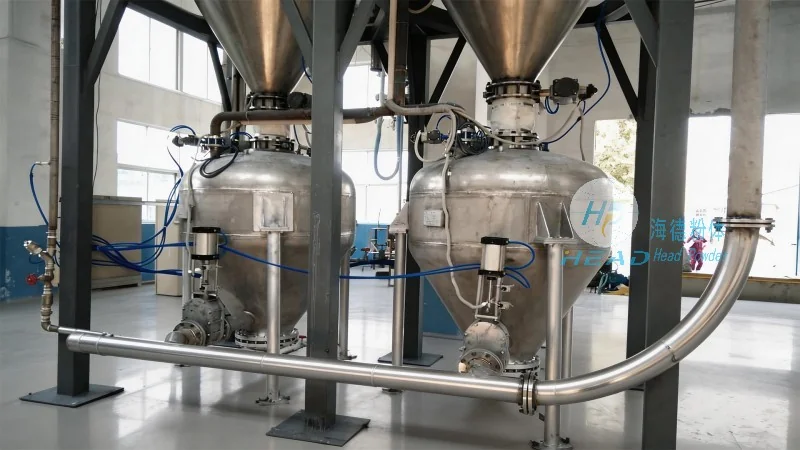
The adoption of talc powder air-flow conveying systems offers several technical advantages over traditional methods, such as mechanical conveying or manual handling. One of the primary advantages is the ability to transport talc powder over long distances with minimal energy consumption. The pneumatic system can cover distances of several kilometers, reducing the need for multiple transfer points and associated equipment. Another advantage is the reduced risk of material contamination and degradation. Unlike mechanical systems that may cause particle attrition or introduce foreign materials, air-flow conveying maintains the powder's integrity and quality. The system also provides better control over the flow rate and pressure, allowing for precise dosing and uniform distribution of the talc powder. This is particularly important in applications where the powder's consistency and particle size distribution are critical. Furthermore, air-flow conveying systems are more flexible and adaptable to changes in production requirements. They can be easily modified or expanded to accommodate increased production volumes or changes in the type of talc powder being handled. The low maintenance requirements of these systems also contribute to their overall cost-effectiveness, as they require fewer moving parts and less frequent repairs compared to mechanical conveying systems. Overall, the technical advantages of talc powder air-flow conveying systems make them a preferred choice for many industrial applications, offering a reliable and efficient solution for material transport.