

Operation Process and Working Principle of Lightweight Calcium Carbonate Material Conveying Line
Lightweight calcium carbonate is a widely used industrial material, and the efficient transportation of this material is crucial for various production processes. This article provides a detailed overview of the operation process and working principle of a lightweight calcium carbonate material conveying line, highlighting the key components, operational mechanisms, and practical applications in industrial settings.
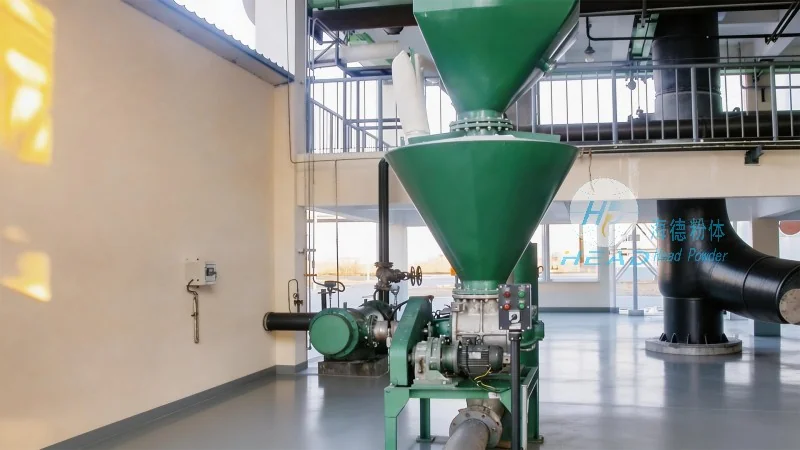
Overview of the Conveying Line System
The lightweight calcium carbonate material conveying line is a specialized system designed to transport fine powders like calcium carbonate efficiently and safely. It typically consists of several core components, including a hopper for material storage, a feeding device to control the flow rate, a conveyor system (such as a screw conveyor or pneumatic conveyor), and a control panel for monitoring and adjustment. Each component plays a vital role in ensuring smooth and continuous material transport.
Working Principle of the Conveying Line
The working principle of the lightweight calcium carbonate conveying line is based on mechanical or pneumatic methods to move the material from the source to the destination. In a mechanical conveyor system, the material is fed into a screw or belt conveyor, which uses rotational motion to push the powder forward. The screw conveyor, for instance, features a helical screw blade that rotates within a cylindrical tube, creating a continuous flow of material. This method is particularly effective for transporting dry, free-flowing powders like calcium carbonate, as it minimizes material degradation and maintains consistent flow rates.
In pneumatic conveying systems, the material is transported using compressed air or other gases. The calcium carbonate powder is drawn into a pipeline by the airflow, and the pressure differential ensures the material moves from the hopper to the discharge point. This method is advantageous for long-distance or high-rise transport, as it can handle larger volumes and reduce the risk of material contamination compared to mechanical systems. However, it requires careful control of air pressure and flow rate to prevent clogging or material loss.
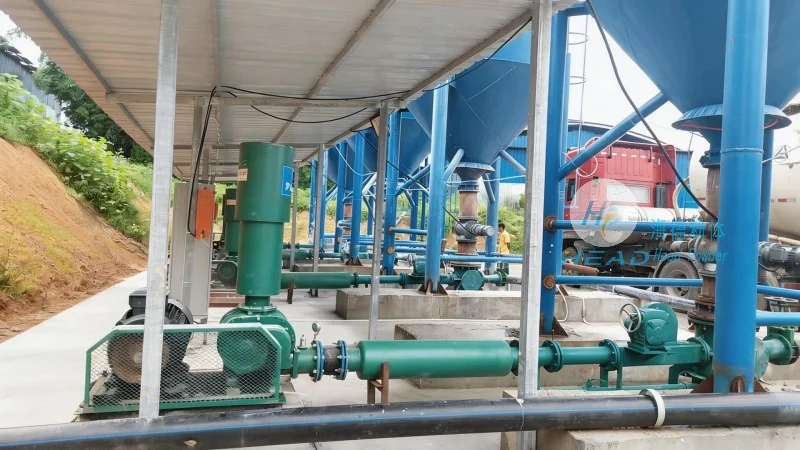
Operation Process of the Conveying Line
The operation process of the lightweight calcium carbonate conveying line involves several sequential steps to ensure optimal performance. First, the material is loaded into the hopper from a storage silo or bulk container. The hopper is equipped with a level indicator to monitor the material volume, and a feeding valve controls the initial flow rate. Next, the feeding device adjusts the material feed rate to match the conveyor's capacity, preventing overloading or underloading. The conveyor system then transports the material through the pipeline or conveyor path to the discharge point, which may be a storage tank, processing unit, or packaging machine.
During operation, the control panel continuously monitors key parameters such as material flow rate, pressure, and temperature. Sensors and indicators provide real-time feedback, allowing operators to make adjustments as needed. For example, if the material flow rate decreases, the feeding valve can be adjusted to increase the input, or the conveyor speed can be increased to maintain the desired output. The system also includes safety features, such as emergency stop buttons and overload protection, to prevent accidents and equipment damage.
Key Components and Their Functions
Several critical components contribute to the efficient operation of the lightweight calcium carbonate conveying line. The hopper serves as the primary storage vessel, with a conical or rectangular design to facilitate material flow and prevent clogging. It is typically made of stainless steel or other corrosion-resistant materials to withstand the chemical properties of calcium carbonate. The feeding device, often a rotary valve or gate valve, regulates the material discharge from the hopper, ensuring a controlled and consistent flow into the conveyor.
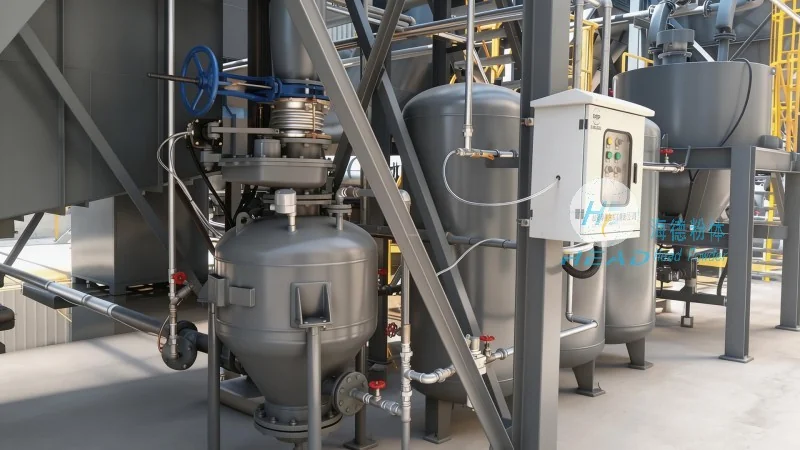
The conveyor system is the heart of the operation, responsible for moving the material through the system. Screw conveyors are commonly used for short to medium distances, as they can handle fine powders without the need for additional equipment. The screw's pitch and diameter are carefully selected based on the material's characteristics, such as particle size and moisture content, to optimize flow and prevent blockages. For longer distances, pneumatic conveyors may be preferred, as they can transport material over several hundred meters with minimal loss. The pipeline is usually made of stainless steel or plastic, depending on the material's compatibility and the system's requirements.
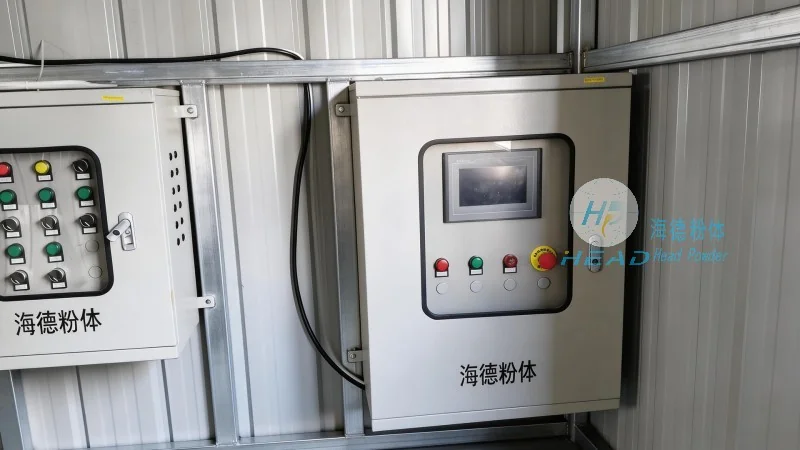
The control panel is another essential component, integrating sensors, meters, and control devices to manage the entire system. It allows operators to set parameters, monitor performance, and troubleshoot issues. The panel may include a digital display showing real-time data, such as flow rate, pressure, and temperature, as well as buttons and switches for manual adjustments. Additionally, the system may be equipped with a programmable logic controller (PLC) that automates the operation, ensuring consistent performance and reducing the need for manual intervention.
Applications and Benefits
The lightweight calcium carbonate conveying line is widely used in various industries, including plastics, coatings, paper, and food processing. In the plastics industry, calcium carbonate is often used as a filler to improve the mechanical properties and reduce costs of polymer products. The conveying line ensures that the material is delivered to the mixing or extrusion units in a consistent and controlled manner, maintaining product quality. In the coatings industry, calcium carbonate is used as a pigment or extender, and the system helps in transporting the powder to the production line without degradation.
One of the key benefits of this conveying line is its ability to handle fine powders efficiently, minimizing material loss and contamination. The mechanical or pneumatic design reduces the risk of dust generation and improves workplace safety. Additionally, the system is designed for low maintenance, with easy access to components for cleaning and replacement. This reduces downtime and operational costs, making it a cost-effective solution for industrial applications.
Another advantage is the system's adaptability to different production requirements. The conveyor speed and flow rate can be adjusted to match the production rate, ensuring that the material is supplied as needed. The system can also be integrated with other production equipment, such as mixers or extruders, to form a complete production line. This integration improves overall efficiency and reduces the need for manual handling, enhancing productivity and product consistency.