

Operating Process and Working Principle of Adjustable Weighing Material Pneumatic Conveying
Shandong HeadPowder Engineering Co., Ltd., commonly known as headpowder, specializes in the design, manufacturing, and installation of advanced pneumatic conveying systems. Our focus is on providing efficient, reliable solutions for the transportation of bulk materials, particularly those requiring precise weight regulation during the conveying process. The company, headquartered in Shandong, China, leverages decades of industry experience to deliver customized systems that meet the specific needs of various industrial sectors.
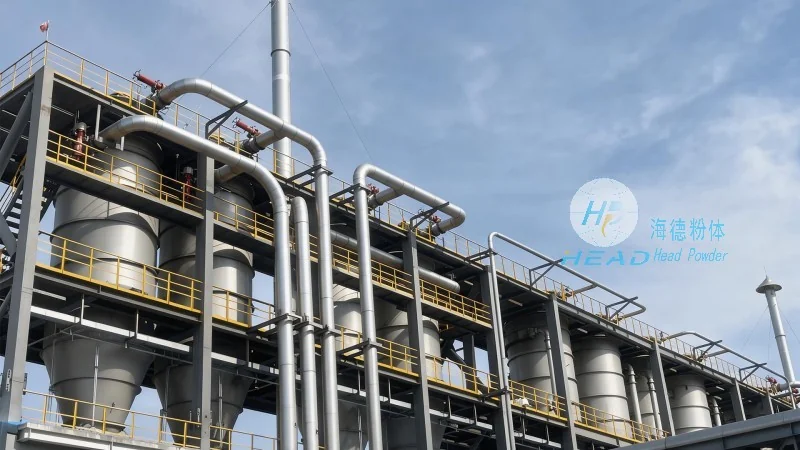
Overview of Pneumatic Conveying Systems for Adjustable Weighing Materials
Pneumatic conveying systems are essential in industries where bulk materials need to be transported from one location to another with accuracy and control. The "adjustable weighing material pneumatic conveying" system, as offered by headpowder, is engineered to maintain consistent material flow rates while ensuring the weight of the conveyed material is precisely monitored and controlled. This technology is crucial in applications such as pharmaceuticals, food processing, and chemical manufacturing, where product quality and compliance with regulatory standards are paramount.
Key Components and Their Functions
The core components of the adjustable weighing material pneumatic conveying system include the material hopper, feeding mechanism, conveying pipeline, pressure vessel, and weighing sensor. The material hopper stores the bulk material and provides a controlled feed to the system. The feeding mechanism, often a rotary valve or screw feeder, regulates the material flow into the pipeline. The conveying pipeline transports the material under pressure, typically using air or other gases as the conveying medium. The pressure vessel ensures the system operates at the desired pressure level, while the weighing sensor continuously monitors the weight of the material being conveyed, allowing for real-time adjustments to maintain the target flow rate.
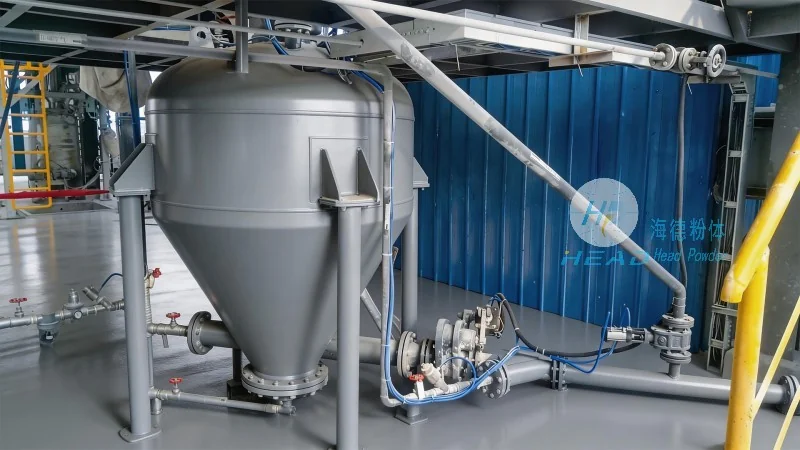
Operating Process: Step-by-Step Execution
The operation of the adjustable weighing material pneumatic conveying system follows a systematic process to ensure efficient and accurate material transport. First, the bulk material is loaded into the material hopper. The feeding mechanism then starts, gradually introducing the material into the conveying pipeline. Simultaneously, the conveying medium (air) is introduced into the system, creating a pressure differential that propels the material forward. The weighing sensor continuously measures the weight of the material being conveyed and sends this data to the control system. The control system analyzes the weight data and adjusts the feeding rate of the material hopper accordingly. This closed-loop control ensures that the material flow rate remains constant, even if external factors such as material density or pipeline resistance change. The process continues until the material reaches its destination, with the system maintaining optimal performance throughout.
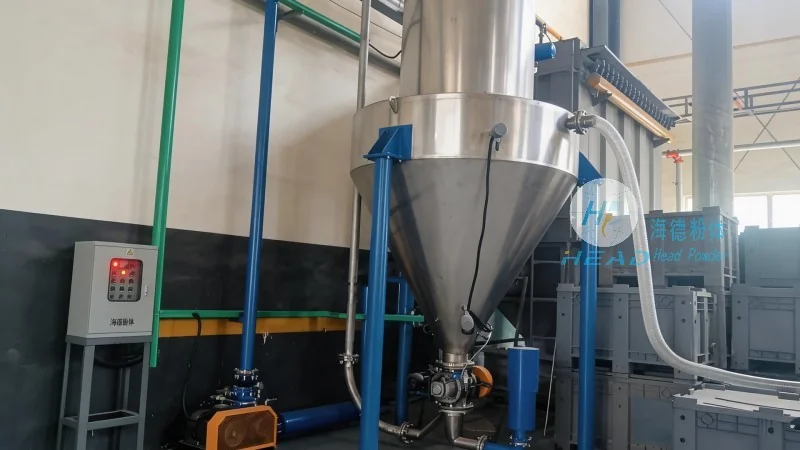
Working Principle: Theoretical and Practical Mechanisms
The working principle of the adjustable weighing material pneumatic conveying system is based on the fundamental laws of fluid dynamics and material transport. The system operates by creating a pressure difference between the material hopper and the receiving container. This pressure difference is generated by the conveying medium (air) moving through the pipeline at a high velocity. As the material is introduced into the pipeline, it is entrained by the air and carried to the destination. The weighing sensor plays a critical role by providing real-time feedback on the material weight, which is used to adjust the feeding rate. This feedback loop ensures that the system maintains the desired material flow rate. Theoretically, the system's performance is governed by the Bernoulli equation and the principles of particle-laden flow, which describe how the velocity and pressure of the conveying medium affect the material's movement. Practically, the system's design and components are optimized to minimize pressure losses and maximize material transport efficiency.
Technical Advantages and Applications
The adjustable weighing material pneumatic conveying system offers several technical advantages that make it suitable for a wide range of industrial applications. One of the key advantages is the ability to maintain precise weight control during the conveying process, which is critical in industries where product consistency is essential. Another advantage is the system's flexibility, as it can be customized to handle different types of materials, from fine powders to bulk solids. The system also provides a dust-free and enclosed environment, which is important for maintaining product quality and safety. In terms of applications, the system is widely used in pharmaceutical manufacturing for the transport of active pharmaceutical ingredients (APIs), in food processing for the handling of powders and granules, and in chemical manufacturing for the transport of raw materials and intermediates. The system's ability to handle materials with varying properties makes it a versatile solution for many industrial needs.