

Operation Process and Working Principle of Latex Powder Material Pneumatic Conveying Line
HeadPowder, a professional manufacturer based in Shandong, China, specializes in providing advanced pneumatic conveying solutions for various industrial applications, including latex powder handling. The company's core product, the latex powder material pneumatic conveying line, is designed to efficiently transport latex powder with precision and reliability.
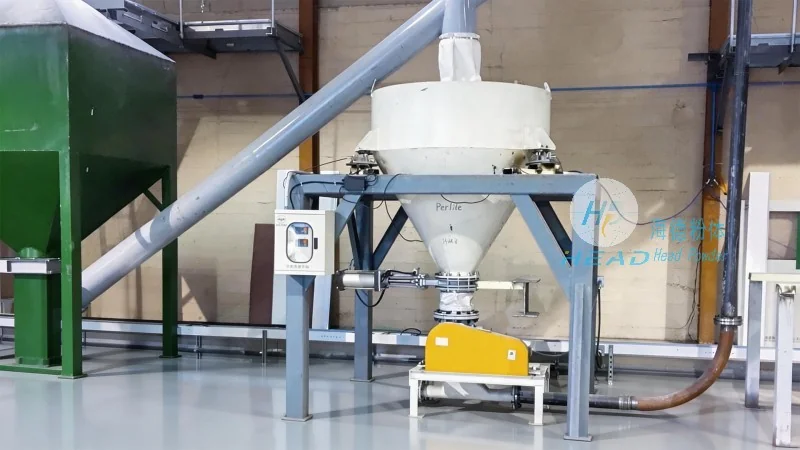
Operation Process of the Latex Powder Pneumatic Conveying Line
The operation process of the latex powder pneumatic conveying line involves several key steps that ensure smooth and efficient material transport. Initially, the latex powder is loaded into the hopper or storage silo. The system then uses a blower or compressor to generate the necessary air pressure, which creates a flow of air through the pipeline. As the air moves, it draws the latex powder particles into the conveying line, forming a dense phase or dilute phase stream depending on the system design. The conveying line typically includes components such as a feeder, pipeline, and receiver, all working in tandem to move the material from the source to the destination. The process is controlled by a programmable logic controller (PLC) or similar control system, which monitors pressure, flow rate, and other parameters to maintain optimal performance. This automated control ensures consistent and reliable operation, minimizing downtime and maximizing productivity.
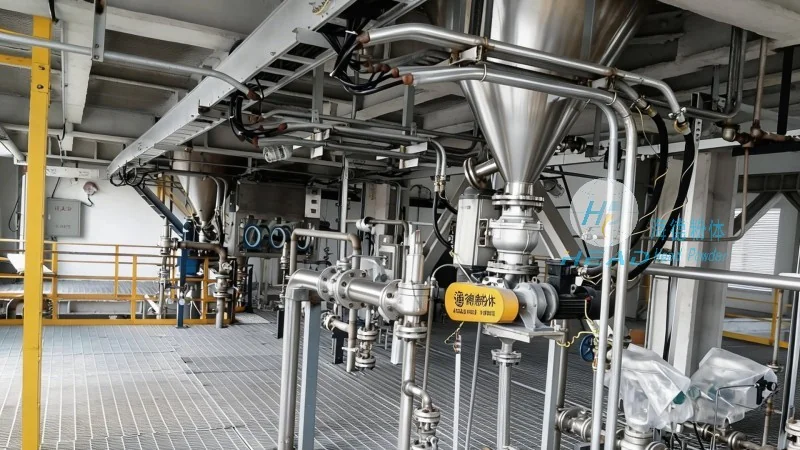
Working Principle of the Pneumatic Conveying System
The working principle of the latex powder pneumatic conveying line is based on the principles of fluid dynamics and particle transport. In a pneumatic conveying system, air is used as the conveying medium to transport solid particles. The system operates by creating a pressure differential between the inlet and outlet of the pipeline. The blower or compressor supplies high-pressure air, which accelerates the air flow and draws the latex powder particles into the conveying line. The particles are suspended in the air stream and transported through the pipeline. The design of the system, including the type of blower (positive displacement or centrifugal), the pipeline diameter, and the conveying distance, all affect the efficiency and capacity of the system. For latex powder, which is a fine, dry material, a dense phase conveying system is often preferred as it reduces particle degradation and improves material handling. The system's components, such as the feeder, which controls the flow rate of the powder, and the receiver, which collects the material at the end of the line, are critical to the overall performance. The control system continuously adjusts the air pressure and flow rate to maintain a stable conveying process, ensuring that the latex powder is transported without clogging or loss.
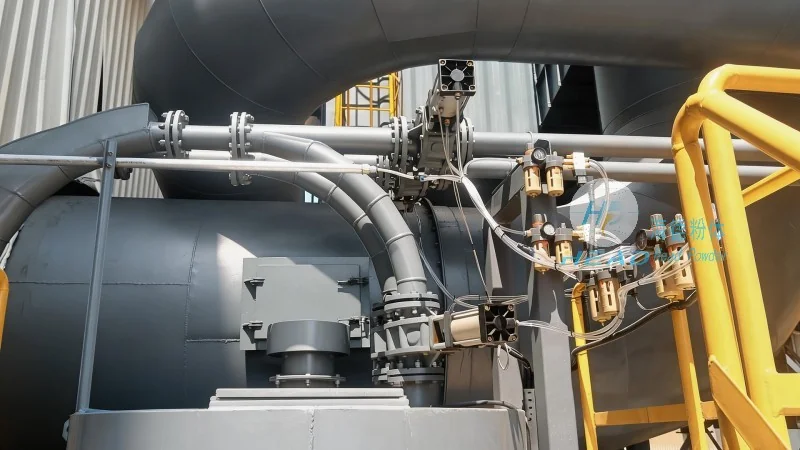
Key Components and Their Roles
The latex powder pneumatic conveying line consists of several key components, each playing a vital role in the overall operation. The hopper or storage silo serves as the initial container for the latex powder, providing a consistent feed source. The feeder is responsible for controlling the flow rate of the powder, ensuring a steady supply to the conveying line. The blower or compressor generates the air pressure needed to move the material, with positive displacement blowers often preferred for their ability to maintain consistent pressure. The pipeline connects the feeder to the receiver, and its diameter and length are carefully designed to optimize the conveying process. The receiver collects the transported latex powder and separates it from the air, typically using a cyclone or filter system. The control system, often a PLC, monitors and adjusts the operation of all components to maintain optimal performance and prevent issues such as blockages or overpressure.