

Operation Process and Working Principle of Rare Earth Crystal Powder Material Pneumatic Conveying Li
Shandong HeadPowder Engineering Co., Ltd., a leading enterprise in the field of material handling technology, specializes in the design, manufacturing, and implementation of advanced pneumatic conveying systems. The company, commonly known as headpowder, is headquartered in Shandong, China, and has established a strong reputation for delivering high-efficiency and reliable solutions for transporting fine powders, including rare earth crystal powders. This article provides a detailed overview of the operation process and working principle of a rare earth crystal powder material pneumatic conveying line, highlighting the key components, operational steps, and technical advantages that ensure optimal performance in industrial applications.
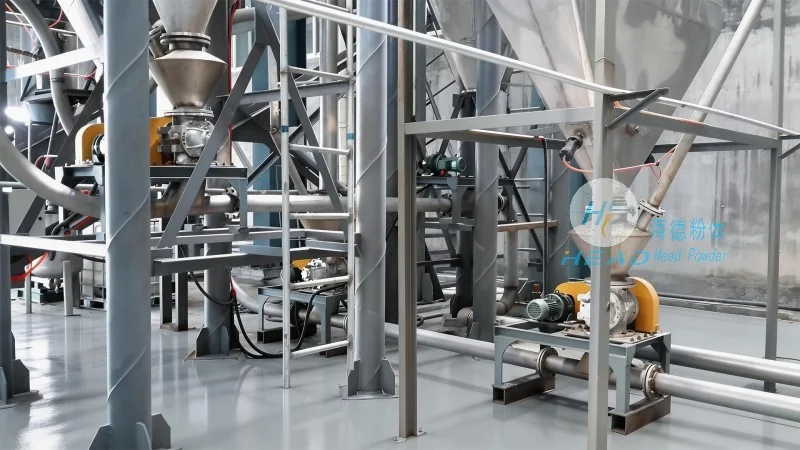
Overview of the Pneumatic Conveying System for Rare Earth Crystal Powders
The rare earth crystal powder material pneumatic conveying line is a sophisticated system engineered to transport fine, abrasive, and potentially hazardous materials like rare earth crystals with precision and efficiency. At the core of this system are several critical components that work in tandem to achieve seamless material movement. The system typically includes a material feeding unit, a conveying pipeline network, a pressure control system, and a discharge or collection unit. Each component is meticulously designed to handle the unique characteristics of rare earth crystal powders, such as their fine particle size, high density, and potential reactivity, ensuring safe and effective operation.
Key Components and Their Functions
1. Material Feeding Unit: This component is responsible for introducing the rare earth crystal powder into the conveying system. It often includes a hopper or a feeder that can regulate the flow rate of the material, preventing overloading or underloading of the system. The feeding unit is equipped with a valve system to control the material discharge, ensuring a consistent and controlled feed into the pipeline. For rare earth crystal powders, which can be prone to bridging or agglomeration, the feeding unit may incorporate vibration or agitator mechanisms to maintain a uniform flow.
2. Conveying Pipeline Network: The pipeline network is the backbone of the pneumatic conveying system, responsible for transporting the material from the feeding point to the discharge point. The pipelines are typically made of materials resistant to corrosion and wear, such as stainless steel or special alloys, to withstand the abrasive nature of rare earth crystals. The system may use either positive pressure (air blowing) or negative pressure (air suction) to move the material, with positive pressure being more common for long-distance or high-volume conveying. The pipeline design includes bends, elbows, and straight sections, each optimized to minimize pressure loss and maintain material velocity.
3. Pressure Control System: This system regulates the air pressure within the pipeline, ensuring that the material is conveyed at the desired velocity and without excessive pressure fluctuations. It includes air compressors, filters, and regulators that maintain a stable pressure environment. The pressure control is crucial for preventing material blockages or system failures, especially when handling fine powders that are susceptible to clogging. The system may also incorporate pressure sensors and alarms to monitor and alert operators of any deviations from the optimal pressure range.
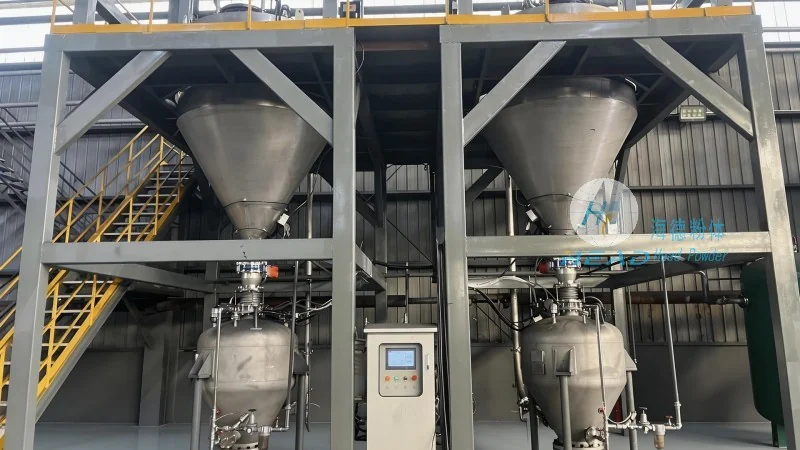
4. Discharge or Collection Unit: The final component of the system is responsible for receiving the conveyed material. This unit may include a hopper, a silo, or a storage tank, depending on the application. The discharge unit is designed to handle the material gently, preventing damage to the crystals and ensuring a smooth transfer to the next processing stage. For rare earth crystal powders, which may be used in downstream processes like smelting or chemical reactions, the discharge unit is often equipped with a dust collection system to minimize environmental contamination and ensure workplace safety.
The Working Principle of the Pneumatic Conveying Line
The operation of the rare earth crystal powder material pneumatic conveying line is based on the principle of fluidization and pneumatic transport. The process begins with the material being fed into the pipeline from the feeding unit. Simultaneously, compressed air is introduced into the pipeline, creating a high-velocity air stream that lifts and transports the material particles. The air flow is designed to maintain the material in a suspended state, preventing it from settling or clogging the pipeline. The velocity of the air stream is critical; it must be sufficient to overcome the gravitational force acting on the material particles and any frictional forces within the pipeline.
As the material travels through the pipeline, it experiences a series of pressure changes. The air compressor provides the necessary pressure to initiate the conveying process, and the pressure is maintained throughout the pipeline to ensure continuous movement. The system may include intermediate pressure boosters or vacuum pumps to maintain the required velocity over long distances. The material and air mixture moves through the pipeline network, passing through bends and elbows, and eventually reaches the discharge unit where the material is separated from the air stream.
The separation process typically involves a cyclone or a filter system. The air stream, now carrying the material particles, enters the cyclone where centrifugal force causes the heavier material particles to be separated from the air. The separated material falls into the collection hopper, while the cleaned air is either recirculated back into the system or discharged to the atmosphere. This separation step is essential for maintaining the purity of the material and preventing contamination in downstream processes.
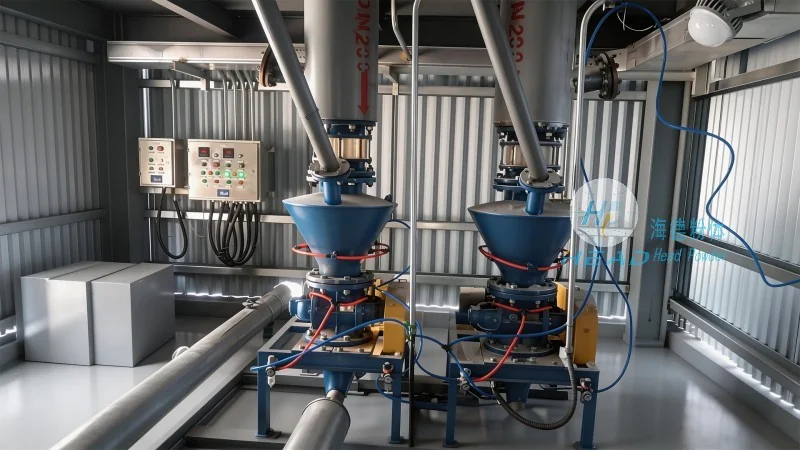
Operation Process: Step-by-Step Guide
The operation of the rare earth crystal powder material pneumatic conveying line follows a systematic sequence of steps to ensure efficient and safe material transport. The process begins with system preparation, which includes checking the integrity of all components, ensuring proper air pressure, and verifying the material feed rate. The following steps outline the typical operation process:
1. System Startup: The air compressor is started, and the pressure is gradually increased to the operating level. The feeding unit is activated, and the material is introduced into the pipeline at a controlled rate. The system is monitored for any pressure drops or abnormal sounds, indicating potential issues.
2. Material Conveying: Once the system is stable, the material begins to be transported through the pipeline. The velocity of the material is observed to ensure it meets the design specifications. The pressure and flow rates are continuously monitored to maintain optimal performance.
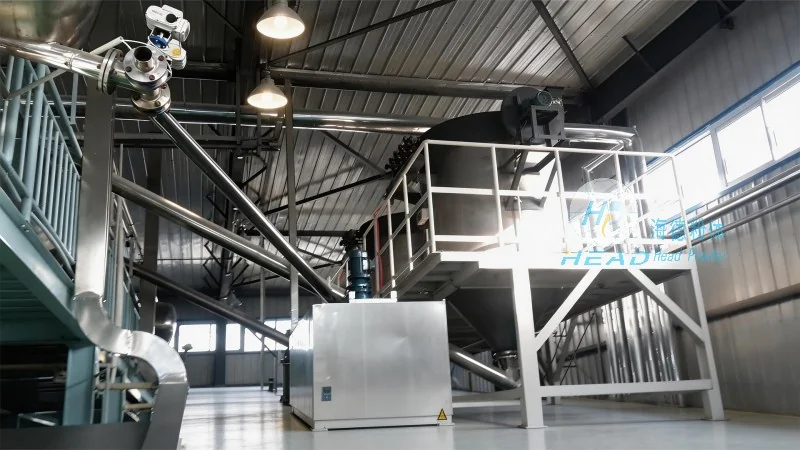
3. Discharge and Collection: At the discharge end, the material is collected in the hopper or silo. The system may include a level sensor to monitor the material level, alerting operators when the storage is full. The air stream is filtered and cleaned before being released or recirculated.
4. System Shutdown: When the conveying operation is complete, the feeding unit is stopped first, followed by the air compressor. The system is depressurized, and any remaining material is cleared from the pipeline to prevent clogging. The components are inspected for any signs of wear or damage before the next operation.
Technical Advantages and Applications
The rare earth crystal powder material pneumatic conveying line offers several technical advantages that make it an ideal solution for industrial applications. These advantages include high efficiency in material transport, minimal material loss, and reduced labor costs compared to traditional methods like bucket elevators or belt conveyors. The system is also highly flexible, allowing for changes in material flow rates and conveying distances without significant modifications.
Applications of this system are widespread in industries that handle rare earth crystals, such as the chemical, metallurgical, and electronics sectors. For example, in the production of rare earth magnets, the conveying line is used to transport fine rare earth powders to the sintering or alloying processes. In the chemical industry, the system is used to move rare earth compounds for further processing or packaging. The system's ability to handle abrasive and potentially hazardous materials makes it a preferred choice for applications where safety and material integrity are paramount.